What Happens After I Die?
The soul's destination, bodily resurrection, two distinct judgments, and two eternal realities.
The Statistic No One Can Escape
There’s a statistic that applies to every person who has ever lived—every king and peasant, every genius and ordinary soul, every saint and sinner. It cuts across all demographic categories. It respects no boundaries of wealth, health, nationality, or belief system. And despite its universality, we rarely talk about it.
The current departure rate is 100%.
Ten out of ten people will die. This isn’t pessimism; it’s simple observation. The life insurance companies know it. The funeral homes know it. The obituary writers have job security. Every person you’ve ever loved, every person you’ve ever passed on the street, every person reading these words right now—all of us are terminal. The only question is when.
James puts it starkly: “What is your life? For you are a mist that appears for a little time and then vanishes” (James 4:14). The Hebrew poet compares our days to “a passing shadow” (Psalm 144:4). We are here, and then we are not. The vapor rises and dissipates. The shadow moves across the ground and disappears.
We construct elaborate defenses against this reality. We speak of death in euphemisms: “passed away,” “no longer with us,” “in a better place.” We avoid mentioning it at dinner parties. We congratulate ourselves on healthy lifestyles as if kale and exercise were tickets to immortality. And yet somewhere beneath all our avoidance, we know. The clock is ticking for every one of us.
The Apostle Paul did not flinch from this truth. From a Roman prison cell, facing the genuine possibility of execution, he wrote: “For to me to live is Christ, and to die is gain. If I am to live in the flesh, that means fruitful labor for me. Yet which I shall choose I cannot tell. I am hard pressed between the two. My desire is to depart and be with Christ, for that is far better” (Philippians 1:21-23).
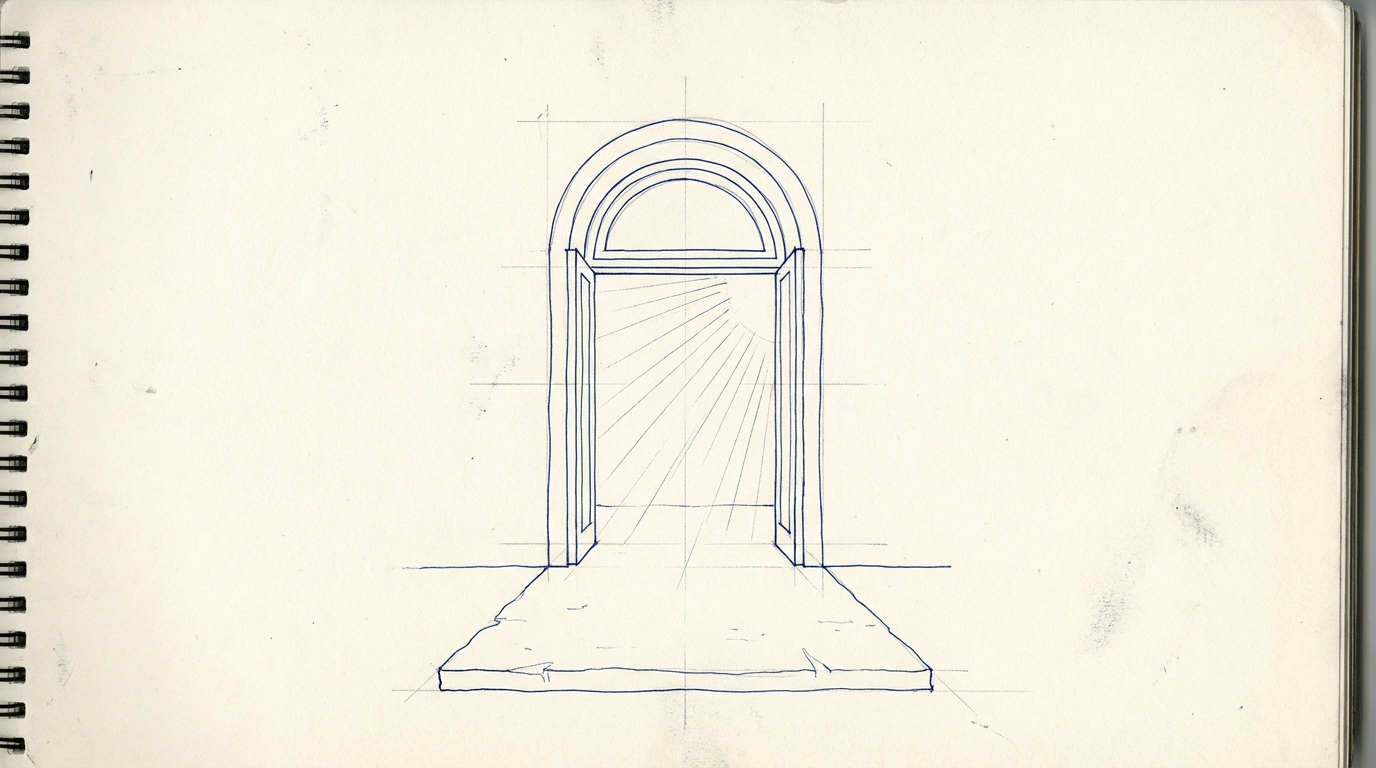
Notice Paul’s word: depart. Not end. Not cease. Not extinguish. Depart—as in leave one place and arrive at another. For Paul, death was not a wall but a door. The question wasn’t whether the journey continued but what lay on the other side.
This is the question we must now face. Having established that we were created for God’s glory in the previous chapter, we must ask: what happens when our earthly opportunity to glorify him ends? What awaits us when the vapor vanishes? This eighth and final worldview question—What happens after I die?—has eternal implications. How we answer it shapes how we live.
The Soul’s Immediate Destination
To understand what happens at death, we must first understand what we are. Scripture reveals that human beings are not merely physical creatures. We are embodied souls—or perhaps more accurately, we are souls that have bodies rather than bodies that have souls.
Genesis tells us that God formed man from the dust of the ground and breathed into his nostrils the breath of life, and man became “a living soul” (Genesis 2:7, KJV). The physical body came from earth; the animating soul came from God’s breath. This composite nature—material and immaterial, visible and invisible, temporal and eternal—is essential to biblical anthropology.
When a person dies, these two components separate. The body returns to dust, awaiting its future. But the soul—the immaterial, conscious self—does not cease to exist. It departs. It goes somewhere.
The question is: where?
Scripture teaches that the soul’s destination depends entirely on one’s relationship to Christ. For those who have trusted in Jesus, death means immediate presence with God. Paul expresses this clearly: “We are of good courage, and we would rather be away from the body and at home with the Lord” (2 Corinthians 5:8). To be absent from the body is to be present with the Lord. There is no gap, no unconscious waiting, no soul sleep. The believer’s soul goes directly into God’s presence.
Jesus promised the thief on the cross, “Today you will be with me in paradise” (Luke 23:43). Not “someday” or “eventually” but today. The transition is immediate.
For the unsaved—those who die without Christ—Scripture presents a sobering reality. Their souls also continue to exist, but in a place of conscious separation from God’s blessing. Jesus’s account of the rich man and Lazarus in Luke 16 describes the unbelieving rich man in Hades, in torment, aware of his situation, and unable to change it.
The Old Testament speaks of Sheol as the realm of the dead. Before Christ’s resurrection, Sheol appears to have been a temporary holding place with two compartments—Paradise for believers (where Abraham and the faithful awaited) and Hades for unbelievers. When Jesus died, he went to Paradise and, upon his resurrection, Scripture indicates he led those faithful souls to heaven itself (Ephesians 4:8-10). The holding place for believers was evacuated; they now dwell in God’s immediate presence. But Hades remains occupied for those who die outside of Christ.
This intermediate state—souls consciously experiencing either God’s presence or his absence—is not the final chapter. It is temporary, awaiting a greater event still to come.
The Future Resurrection
Christianity does not teach that souls float forever in some ethereal existence. We are embodied creatures, and God’s plan involves the redemption of our bodies, not merely their abandonment.
“Behold! I tell you a mystery,” Paul writes to the Corinthians. “We shall not all sleep, but we shall all be changed, in a moment, in the twinkling of an eye, at the last trumpet. For the trumpet will sound, and the dead will be raised imperishable, and we shall be changed” (1 Corinthians 15:51-52).
Resurrection means bodily resurrection. The physical bodies of believers, whether decomposed in graves or scattered across oceans or cremated to ashes, will be reconstituted, transformed, and reunited with their souls. This is not resuscitation—being brought back to the same mortal body that will eventually fail again. This is transformation into something new: “For this perishable body must put on the imperishable, and this mortal body must put on immortality” (1 Corinthians 15:53).
What will these resurrection bodies be like? They will be real, physical bodies—Jesus’s resurrection body could be touched, could eat fish, could walk through doors. They will be continuous with our present bodies yet gloriously transformed—no more decay, disease, disability, or death. Paul calls them “spiritual bodies” (1 Corinthians 15:44), not because they’re made of spirit instead of matter, but because they’re perfectly animated and empowered by the Spirit rather than constrained by fallen flesh.
For believers, this resurrection is pure hope. The body that struggles with weakness, that bears the scars of life in a fallen world, that slowly degrades with age—that body will be raised imperishable, immortal, glorious.
But resurrection is not limited to believers. The unsaved will also be raised, but for a different purpose. Jesus declares: “Do not marvel at this, for an hour is coming when all who are in the tombs will hear his voice and come out, those who have done good to the resurrection of life, and those who have done evil to the resurrection of judgment” (John 5:28-29).
Unbelievers will be raised bodily to stand before God in judgment—not as disembodied souls but as whole persons, body and soul reunited, to give account and receive the verdict their rejection of Christ has sealed. This is not a resurrection to life but to judgment—a resurrection that makes their condemnation complete.
Two Distinct Judgments
“It is appointed for man to die once, and after that comes judgment” (Hebrews 9:27). Everyone who dies will be judged. But Scripture reveals two different judgments for two different groups of people.
The Judgment Seat of Christ
Believers will stand before what Paul calls “the judgment seat of Christ” (2 Corinthians 5:10). This is not a judgment of condemnation. Christ already bore the condemnation for our sins at the cross. “There is therefore now no condemnation for those who are in Christ Jesus” (Romans 8:1). The sin question has been settled; the verdict has already been rendered; the penalty has already been paid.
What, then, is being judged? Not our salvation but our service. Not whether we belong to Christ but what we did with the life Christ gave us.
Paul explains this using the imagery of building materials: “Now if anyone builds on the foundation with gold, silver, precious stones, wood, hay, straw—each one’s work will become manifest, for the Day will disclose it, because it will be revealed by fire, and the fire will test what sort of work each one has done. If the work that anyone has built on the foundation survives, he will receive a reward. If anyone’s work is burned up, he will suffer loss, though he himself will be saved, but only as through fire” (1 Corinthians 3:12-15).
Some believers’ works will prove to be gold—faithful service that honored God and blessed others. Other believers’ works will prove to be hay—busy activity that accomplished nothing of eternal value. The fire of Christ’s evaluation will reveal the difference. Some will receive reward; others will “suffer loss” of reward while still being saved.
What are these rewards? Scripture speaks of crowns that believers will receive—and then, in one of the most beautiful images in Revelation, we see the redeemed casting their crowns at Jesus’s feet, saying, “Worthy are you, our Lord and God, to receive glory and honor and power” (Revelation 4:11). The rewards are not for hoarding but for worship—a means of expressing our gratitude to the One who saved us.
The Great White Throne
The judgment facing unbelievers is entirely different. John describes it in Revelation 20: “Then I saw a great white throne and him who was seated on it… And I saw the dead, great and small, standing before the throne, and books were opened. Then another book was opened, which is the book of life. And the dead were judged by what was written in the books, according to what they had done. And the sea gave up the dead who were in it, Death and Hades gave up the dead who were in them, and they were judged, each one of them, according to what they had done” (Revelation 20:11-13).
This is the Great White Throne judgment, and it is terrifying. Unbelievers will be judged according to their deeds—and their deeds will condemn them. Apart from Christ’s righteousness covering them, their sins stand against them, recorded, remembered, requiring payment.
The decisive factor is the Book of Life: “And if anyone’s name was not found written in the book of life, he was thrown into the lake of fire” (Revelation 20:15). The question is not whether someone was good enough—no one is. The question is whether their name is in that book. And it’s there only for those who have trusted Christ.
Two Eternal Realities
After judgment comes eternity. And Scripture presents two radically different eternal destinies.
Eternal Restoration
For believers, the final destination is not floating on clouds or strumming harps in some ethereal heaven. It is life in a renewed creation where God dwells with his people.
“Then I saw a new heaven and a new earth, for the first heaven and the first earth had passed away… And I heard a loud voice from the throne saying, ‘Behold, the dwelling place of God is with man. He will dwell with them, and they will be his people, and God himself will be with them as their God. He will wipe away every tear from their eyes, and death shall be no more, neither shall there be mourning, nor crying, nor pain anymore, for the former things have passed away’” (Revelation 21:1-4).
This is restoration, not escape. The goal was always for God to dwell with humanity in an earthly realm—this was Eden’s design before sin corrupted it. In the new creation, that design is finally and permanently realized. God with us. Every tear wiped away. Death itself destroyed. No more mourning, no more crying, no more pain.
This is what we were made for. This is the glory we will see and share forever. This is home.
Eternal Condemnation
For unbelievers, Scripture presents a reality we must speak of soberly, without sensationalism but without softening.
“Then Death and Hades were thrown into the lake of fire. This is the second death, the lake of fire. And if anyone’s name was not found written in the book of life, he was thrown into the lake of fire” (Revelation 20:14-15).
The “second death” is not annihilation—ceasing to exist. Jesus describes it as a place “where their worm does not die and the fire is not quenched” (Mark 9:48), an image of perpetual, conscious exclusion from God’s goodness. It is existence without hope, without grace, without the possibility of change. The door of salvation closes.
This is the most sobering doctrine in Scripture. We cannot pretend it isn’t there. We cannot soften it into metaphor. Jesus spoke of hell more than anyone else in the Bible, and he did so not to terrorize but to warn—to underscore the urgency of responding to the gospel while time remains.
The good news is that no one has to face this judgment. Christ bore the wrath we deserved. The invitation to trust him remains open today. But it will not remain open forever. There is no indication in Scripture of second chances after death. Now is the day of salvation.
Living with Eternity in View
If these things are true—if death is a door rather than a wall, if judgment awaits, if eternity stretches infinitely in one of two directions—then how should we live?
Everything changes. The vapor that is our life takes on infinite significance because it’s preparation for what comes next. Every day becomes an opportunity, every choice carries weight, every relationship matters.
Paul, facing death in his Roman cell, didn’t grasp desperately at more time. He understood that to depart and be with Christ was “far better.” But neither did he dismiss his remaining days as irrelevant. As long as he lived, there was work to do, people to serve, Christ to glorify.
This is the balance we’re called to strike: holding life loosely while living it purposefully, longing for heaven while engaging fully with earth, knowing that this is not our final home while still treating it as the arena where our eternal service begins.
C.S. Lewis observed that the Christians who did the most for this present world were precisely those who thought most about the next. It’s not escapism; it’s perspective. When you know where you’re headed, you travel differently.
We’ve now answered all eight worldview questions. We know where truth is found, whether God exists, how we got here, what went wrong, what the solution is, who we are, why we’re here, and what happens after we die. But knowledge alone isn’t enough. In our final chapter, we’ll bring it all together—exploring how this worldview transforms our daily lives.
Reflection Questions
-
How often do you think about death and what follows? Do you avoid the topic, or does eternity inform how you live today?
-
How does the distinction between the Judgment Seat of Christ (for believers) and the Great White Throne (for unbelievers) affect your understanding of God’s justice and mercy?
-
Consider Paul’s statement that to depart and be with Christ is “far better.” What would have to change in your understanding of heaven for you to genuinely feel this way about your own death?
-
Are there people in your life who, as far as you know, are not trusting in Christ? How does the reality of eternal judgment affect your sense of urgency to share the gospel with them?
-
The chapter argues that thinking about eternity should make us more engaged with this life, not less. Do you find this counterintuitive? How might an eternal perspective change your approach to this week?
Key Takeaways
-
Death is universal and inevitable (100% departure rate), but for Christians, death is not an ending but a departure—moving from one place to another, “to be with Christ, which is far better” (Philippians 1:23).
-
The soul’s destination immediately after death depends on one’s relationship to Christ: believers enter God’s presence; unbelievers enter conscious separation from God’s blessing in Hades.
-
Bodily resurrection awaits both the saved (raised imperishable, immortal, glorious) and the unsaved (raised for judgment)—Christianity affirms the redemption of our bodies, not their abandonment.
-
Two judgments await: the Judgment Seat of Christ evaluates believers’ service for rewards (not salvation), while the Great White Throne judges unbelievers according to their deeds, with the Book of Life as the decisive factor.
-
Two eternal realities: believers will dwell with God in a new heaven and new earth where death, mourning, and pain are gone forever; unbelievers face the “second death”—eternal separation from God in the lake of fire.