Living It Out
Moving from information to transformation through daily practices, engaging others, and the ministry of reconciliation.
Information Versus Transformation
In 1905, Albert Einstein published his special theory of relativity, forever changing our understanding of space, time, and energy. Within a few years, physicists around the world grasped the theory’s implications. They could recite its equations, debate its consequences, and teach it to their students. But for most of those physicists, daily life continued unchanged. They still caught the same trains, ate the same meals, and navigated the world as though time and space were exactly what Newton had assumed them to be.
This is the difference between information and transformation.
We can know something intellectually without it reshaping how we live. We can understand a truth without inhabiting it. We can possess correct ideas while operating from a completely different set of assumptions.
The same danger confronts us now. Over the preceding chapters, we’ve worked through eight fundamental questions that every worldview must answer. We’ve examined where truth is found (God’s revealed Word), whether God exists (the evidence points compellingly to yes), how we got here (created in God’s image for relationship with Him), what went wrong (sin—Adam’s fall and our own rebellion), what the solution is (Jesus Christ, the new and better Adam, who reconciles us to God through His death and resurrection), who we are (image-bearers, adopted in Christ, made new), why we’re here (to magnify God’s glory in all we do), and what happens after we die (judgment and eternal destiny, either with God or separated from Him forever).
That’s a coherent, beautiful framework. It’s also potentially useless.
Useless if it stays on paper. Useless if it remains theory. Useless if it becomes another set of ideas we affirm on Sunday while living by entirely different scripts Monday through Saturday.
The Apostle James cuts through our self-deception: “Be doers of the word, and not hearers only, deceiving yourselves. For if anyone is a hearer of the word and not a doer, he is like a man who looks intently at his natural face in a mirror. For he looks at himself and goes away and at once forgets what he was like” (James 1:22-24).
A man looks in the mirror, sees his reflection clearly, then walks away and immediately forgets what he saw. This is the person who understands biblical truth but never applies it. The information was there—accurate, clear, available—but it produced no change. The gap between seeing and living remained unbridged.
This final chapter is about bridging that gap. How do we move from information to transformation? How does a worldview cease to be merely a set of propositions we believe and become the lens through which we actually interpret our experiences, make our decisions, and live our lives?
The Journey So Far
Let’s briefly recall where we’ve been.
We began by recognizing that everyone has a worldview—a set of assumptions that shape how we interpret reality. These assumptions determine our beliefs, which shape our values, which drive our behavior. The chain runs worldview to beliefs to values to behavior. If we want transformed lives, we must renovate the worldview itself.
We then explored the question of truth and established that the Bible is God’s authoritative, reliable Word—not “cleverly devised myths” (2 Peter 1:16) but eyewitness testimony confirmed by manuscript evidence, archaeological discovery, and fulfilled prophecy. Here we find absolute truth that provides a stable foundation in a culture awash in relativism.
From there we considered whether God exists. The cosmological argument, the fine-tuning of universal constants, and the astounding complexity of DNA all point toward an intelligent, transcendent, eternal Creator—one who matches the God revealed in Scripture.
We examined our origins—created by God in His image, fearfully and wonderfully made, possessing inherent dignity and worth from womb to tomb. This grounds human value in something far more stable than social consensus or political power.
Then came the uncomfortable truth: something is deeply wrong. The root problem is sin—inherited from Adam’s federal headship and confirmed by our own choices. The heart is the issue, not merely our circumstances or systems.
But God did not leave us in our broken state. Through Jesus—born of a virgin to escape Adam’s curse, living a perfect life, dying as our substitute, rising to defeat death—God provided what no other worldview offers: an actual remedy, not just diagnosis. The cross is where justice and love meet, where God is both “just and the justifier of the one who has faith in Jesus” (Romans 3:26).
This changes who we are. Our identity is no longer defined by past failures, cultural categories, or performance metrics. In Christ, we are new creations—adopted, forgiven, beloved, God’s own workmanship.
And it clarifies why we’re here. Not for self-fulfillment or personal happiness (though those are often byproducts) but to magnify God’s glory—to see Him more clearly and display His greatness in everything we do, from the smallest task to the most significant decision.
Finally, we confronted our mortality. Death is not the end but a door. What lies beyond—whether eternal restoration with God or eternal separation from Him—depends entirely on our relationship to Christ. The stakes are infinite.
This is the framework. The question now is: what do we do with it?
Daily Practices for Worldview Formation
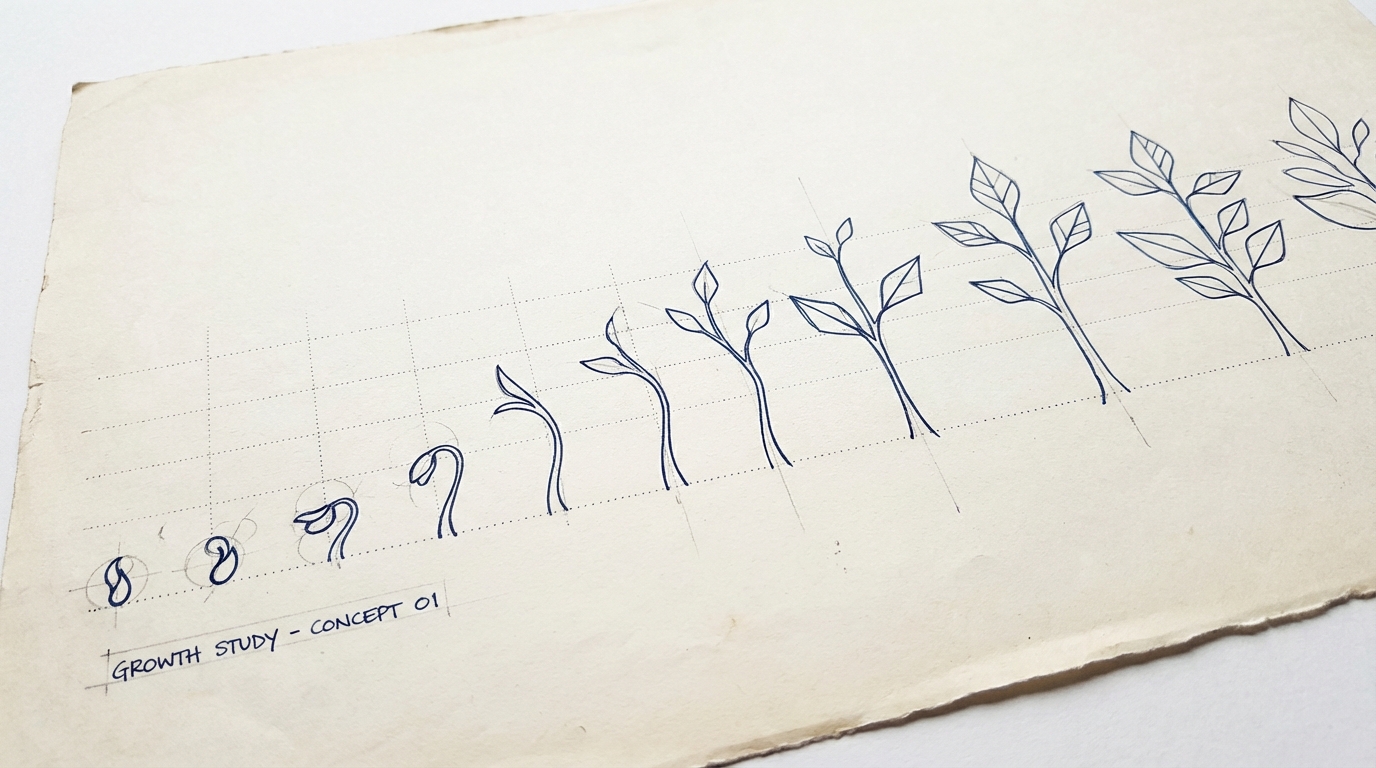
Worldviews are not installed like software. They are cultivated like gardens—through patient, consistent, intentional work over time. The renewal of the mind that Paul describes in Romans 12:2 is not a one-time event but an ongoing process. “Do not be conformed to this world, but be transformed by the renewal of your mind, that by testing you may discern what is the will of God, what is good and acceptable and perfect.”
Notice the present tense: be transformed, keep being renewed. This is a daily reality, not a historical moment.
How does this renewal happen? Three practices prove essential.
First, regular engagement with Scripture. The Bible is not merely a reference book to consult when problems arise. It is the primary means by which God renews our minds, reshapes our assumptions, and realigns our hearts with His truth. “The law of the Lord is perfect, reviving the soul; the testimony of the Lord is sure, making wise the simple” (Psalm 19:7).
This requires more than occasional reading. It means dwelling in the text—meditating on passages rather than rushing through chapters, memorizing verses that address our particular struggles, allowing Scripture to interrogate our assumptions rather than merely confirming what we already believe.
When we find ourselves anxious about finances, we don’t just tell ourselves to worry less. We return to Jesus’s words: “Do not be anxious about your life, what you will eat or what you will drink, nor about your body, what you will put on. Is not life more than food, and the body more than clothing?” (Matthew 6:25). We let His perspective challenge and reshape our functional beliefs about security and provision.
Second, prayer and reflection. Worldview transformation happens when we bring our lives before God honestly—not just our requests but our reactions, our fears, our unexamined assumptions. Prayer becomes a laboratory where we test our beliefs against God’s character and allow His Spirit to expose what needs correction.
This includes what some have called “examen”—a practice of reviewing the day with God, noticing where we responded from faith versus fear, where we operated from our stated beliefs versus our functional beliefs. When we catch ourselves overreacting to criticism, we can ask: “What did I believe in that moment about my identity? Was it consistent with who God says I am in Christ?”
Such reflection takes time. It requires the discipline of silence in a noisy world. But without it, we simply react to life from whatever default programming we’ve absorbed, never examining whether that programming aligns with truth.
Third, community and accountability. Worldview formation is not a solitary project. We are too skilled at self-deception, too blind to our own blind spots. We need brothers and sisters who know us well enough to notice when our stated beliefs and our lived beliefs diverge.
This is one reason the writer of Hebrews insists, “Let us consider how to stir up one another to love and good works, not neglecting to meet together, as is the habit of some, but encouraging one another” (Hebrews 10:24-25). Christian community isn’t merely about fellowship—it’s about formation. We grow in Christ together, challenging and encouraging one another toward maturity.
Find people who will ask hard questions about your life, people who care enough to speak truth when you’re drifting, people who pray for you and with you. This is not optional for serious worldview transformation.
Engaging Others with Different Worldviews
A renewed worldview doesn’t make us retreat from the world but engages it more effectively. The same truths that transform our inner lives equip us to interact thoughtfully with neighbors, coworkers, and family members who see reality through different lenses.
Yet how we engage matters as much as what we say. Peter instructs, “Always [be] prepared to make a defense to anyone who asks you for a reason for the hope that is in you; yet do it with gentleness and respect” (1 Peter 3:15). Preparation and gentleness, reason and respect—these must go together.
Several principles help.
Listen before speaking. Most people are not waiting for a lecture. They want to be understood before they’re instructed. Ask genuine questions about what they believe and why. Understand the reasons behind their worldview, the experiences that shaped it, the questions it’s trying to answer. This isn’t merely tactical; it’s loving. People are not projects to convert but neighbors to understand and serve.
Ask good questions. Often the most powerful apologetic isn’t a declaration but an inquiry. When someone insists that truth is relative, you might gently ask, “Is that statement absolutely true, or is it just your personal opinion?” When someone dismisses the idea of inherent human dignity, you might wonder aloud, “On what basis, then, do we condemn injustice or call anything ‘wrong’?” Questions invite reflection without triggering defensiveness.
Present truth with grace. Paul tells the Colossians to “walk in wisdom toward outsiders, making the best use of the time. Let your speech always be gracious, seasoned with salt, so that you may know how you ought to answer each person” (Colossians 4:5-6). Gracious speech doesn’t mean mushy speech that avoids difficult truths. Salt adds flavor and preserves—it’s potent. But the overall disposition is grace, not condemnation.
Remember: we are not trying to win arguments but to win people. The goal is not to prove ourselves right but to point others toward Christ. Sometimes that means absorbing an insult without retaliation. Sometimes it means acknowledging where the church has failed. Sometimes it means simply living differently—letting our transformed lives raise questions that our words can then answer.
The Ministry of Reconciliation
In chapter six, we saw that God has not only reconciled us to Himself through Christ but has commissioned us as ambassadors of reconciliation. “All this is from God, who through Christ reconciled us to himself and gave us the ministry of reconciliation… Therefore, we are ambassadors for Christ, God making his appeal through us” (2 Corinthians 5:18, 20).
An ambassador represents someone else. He doesn’t speak his own message but delivers the king’s. He doesn’t pursue his own agenda but advances his sovereign’s purposes. And he operates in foreign territory—not at home but among those who don’t yet recognize his king’s authority.
This is our calling. We are stationed in a world that doesn’t yet recognize Jesus as Lord, carrying a message of peace from the One who made peace through the blood of His cross. Our mission is reconciliation—bringing people, relationships, and even broken systems back toward alignment with God’s original design.
This happens in grand ways and small. It happens when we share the gospel with someone far from God and they trust Christ. It happens when we help a fractured family reconcile. It happens when we bring justice to a situation of exploitation. It happens when we care for creation, stewarding the Father’s world rather than exploiting it.
The local church is, as one pastor put it, “headquarters for world reconciliation.” This is not a weekend social club or a religious self-help group. It is a community of reconciled people learning to extend reconciliation in every sphere of life—in our families, neighborhoods, workplaces, and nations.
What sphere of influence has God given you? Who are the people He has positioned you to reach? What broken situations might you bring redemptive presence into? These questions move the ministry of reconciliation from abstract theology to concrete calling.
The Ongoing Nature of Renewal
A word of realism: this transformation is a lifelong project.
Paul described his own ongoing struggle: “Not that I have already obtained this or am already perfect, but I press on to make it my own, because Christ Jesus has made me his own” (Philippians 3:12). Even the apostle who wrote much of the New Testament hadn’t arrived. He was still pressing on.
We will have good days and bad days. Moments when our functional beliefs align beautifully with our professed beliefs, and moments when old scripts reassert themselves. Periods of clarity and periods of confusion. This is normal. The goal isn’t perfection in this life but faithfulness over time—a general trajectory of growth, even with setbacks.
Romans 12:2 speaks of ongoing transformation, not instantaneous arrival. We are being transformed, day by day, as we cooperate with the Spirit’s work in our lives. The key is not to give up when we stumble but to return, repent, re-anchor in truth, and continue forward.
The farmer doesn’t despair when weeds appear in the garden. He pulls them and keeps cultivating. So with us. When unbiblical assumptions surface—as they will—we identify them, uproot them, and plant Scripture’s truth in their place. Over time, the garden grows more productive, the harvest more abundant.
Taking Action
So where do we begin? Five concrete steps can launch the journey from information to transformation.
One, identify your weak spots. Where do your stated beliefs and lived beliefs most often diverge? Is it in how you handle money? How you respond to criticism? How you treat your spouse when you’re stressed? What you fear most? Ask God to reveal the gaps between what you profess and how you function.
Two, connect those gaps to worldview issues. If you worry constantly about the future, what do you functionally believe about God’s sovereignty and care? If you’re devastated by disapproval, what do you functionally believe about your identity? Trace the behavior back to the buried belief, then examine that belief in light of Scripture.
Three, develop a plan for mind renewal. Select specific passages that speak to your weak spots. Memorize them. Meditate on them. Write them where you’ll see them. Let them become the new script that plays in your mind when old triggers arise.
Four, find your people. Tell a trusted friend, mentor, or small group about your journey. Ask them to pray for you and check in on you. Invite honest feedback about how you’re doing.
Five, commit for the long haul. This isn’t a program that takes six weeks. It’s a way of life. Build sustainable practices rather than unsustainable bursts of intensity. Better to read one psalm each morning for twenty years than to read the entire Bible in a month and then nothing for the next decade.
A Vision of Transformed Living
What does it look like when information becomes transformation? What kind of person emerges from this journey?
Imagine someone who holds their opinions with confidence but not arrogance—firmly convinced of what Scripture teaches yet humble about their own understanding, open to learning while anchored in truth.
Imagine someone who engages the culture without being captured by it—present in conversations about politics, ethics, and society but not taking their cues from any party or ideology, always asking first what God has revealed before asking what the talking heads recommend.
Imagine someone who faces suffering without despair—not pretending pain doesn’t hurt but interpreting it through a framework that includes an all-powerful, all-loving God who works all things together for good (Romans 8:28).
Imagine someone who confronts death without terror—not because they’re morbid or in denial but because they know the vapor will give way to everlasting presence with Christ, which is “far better” (Philippians 1:23).
Imagine someone whose whole life—from their career to their parenting to their spending to their leisure—is oriented around the glory of God. Not a grim religious duty but a joyful alignment with reality. They do whatever they do for His glory, and in doing so, they find the satisfaction that self-centered living could never provide.
This is the fruit of a biblical worldview actually lived. Not perfection but direction. Not arrival but faithful traveling. Not a checklist completed but a relationship deepened.
We opened this book with Sarah and James in a coffee shop, their frustrated conversation revealing worldviews inconsistent with the faith they professed. What would it look like for them—and for us—to live differently?
It would look like catching ourselves mid-complaint and asking, “What do I functionally believe right now?” It would look like regular return to Scripture to realign our distorted assumptions. It would look like community that challenges and encourages. It would look like engaging a confused culture with truth and grace. It would look like living as ambassadors of reconciliation, pointing a fractured world toward the One who puts all things back together.
You’ve read nine chapters of framework. Now comes the tenth—the chapter you’ll write with your life.
Go and live it.
Reflection Questions
-
Where is the gap between your stated beliefs and your functional beliefs most pronounced? What would it take to close that gap?
-
Of the three daily practices discussed (Scripture engagement, prayer and reflection, community and accountability), which is most lacking in your life right now? What one step could you take this week to strengthen it?
-
Think of someone in your life who holds a different worldview. How might you engage them with both truth and grace this month?
-
What sphere of influence has God given you for the ministry of reconciliation? How might you be more intentional about bringing redemptive presence to that sphere?
-
As you look back on this book, what truth has struck you most? What will you do about it?
Key Takeaways
-
The danger is information without transformation—knowing truth without living it. James warns against being hearers only, not doers.
-
Worldview formation is a daily process requiring regular Scripture engagement, prayer and reflection, and Christian community that provides accountability and encouragement.
-
Engaging those with different worldviews requires listening first, asking good questions, and presenting truth with grace—seeking to win people, not arguments (Colossians 4:5-6).
-
We are ambassadors of reconciliation, carrying Christ’s message of peace to a world still at war with its Creator, called to bring redemptive presence to every sphere of influence God gives us (2 Corinthians 5:18-20).
-
This is a lifelong journey of ongoing renewal (Romans 12:2)—not perfection but faithful direction, pressing on toward maturity in Christ.